
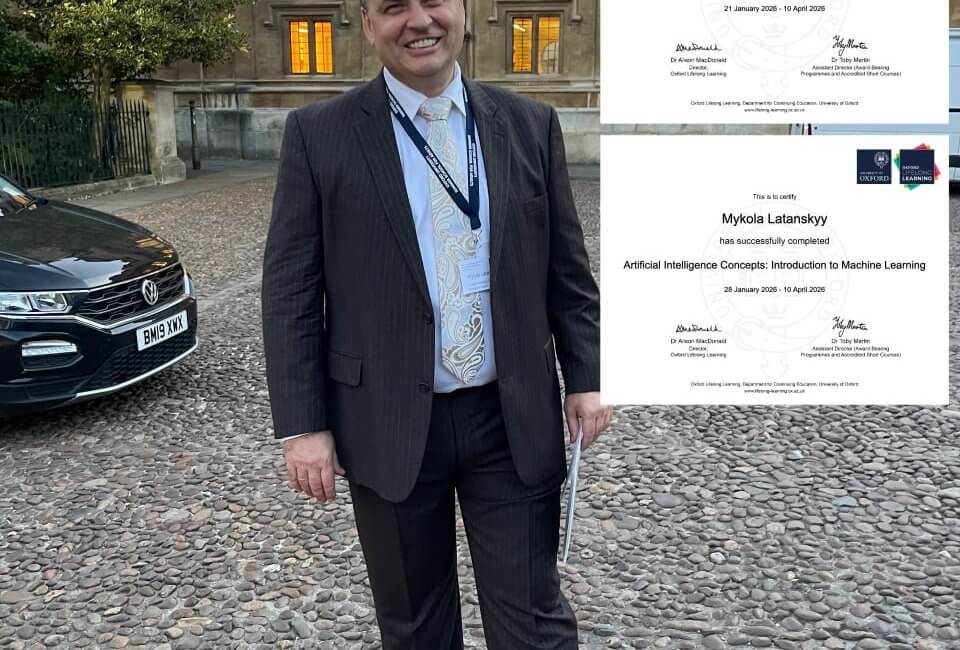
Many years ago, back in the 1990s, when I was a student at a polytechnic university, I dreamed of automating my own apartment. Back then, almost no one was talking about “smart homes,” but I was already fascinated by the idea that space, technology, systems, and devices could be connected into one intelligent organism.
Later, in 2005, I founded an engineering company specializing in smart homes and intelligent buildings. By the way, that company is still operating today — 20 years later! And in 2007, I left the engineering business and moved into the field of personal growth, because at some point I clearly saw that people needed more than technology. They needed self-understanding, self-belief, inner grounding, and tools to access their innate genius.
For many years, I was fully dedicated to personal growth, the psychology of success, and the development of human potential. But over the past few years, some invisible force has been persistently pulling me back to my roots — to my technical background, engineering mindset, and deep understanding of systems. And today I have to admit: since 2020, I have been seriously studying artificial intelligence.
Not in the sense of “how to write a good prompt,” “which app to download,” or “where to generate text, images, or videos.” What interests me is the depth: what makes artificial intelligence truly intelligent; how neural networks are structured; how a model is trained; what machine learning really is; how data becomes decisions; where the boundary lies between algorithm, intelligence, thinking, and creativity; and how AI is changing the very nature of human activity.
Recently, I wrote that in June 2026 I will be attending a week-long Philosophy of AI school in Venice, and in August 2026, a specialized Oxford course on AI and Applied Data Science. Today I want to share another important step: I have completed two Oxford courses in artificial intelligence — AI Concepts: Practical Applications and AI Concepts: Introduction to Machine Learning.
I’ll be honest: on the one hand, this field is drawing me in more and more deeply. On the other hand, finding time for serious, thoughtful study is not easy. But that time has to be found. Because today, whatever we do, whatever profession, industry, or business we are in, we can no longer afford the luxury of remaining superficial users of artificial intelligence.
Many people think that mastering AI means knowing how to write prompts, being familiar with a few popular services, and downloading a couple of apps from the App Store or Google Play. The ability to write prompts is a useful skill. But it is only the entry level, not a true understanding of artificial intelligence.
We need another level: the level of understanding, of the architect, of the co-creator. The level of a person who understands not only what to click, but what is happening inside the system, what logic it follows, what limitations it has, where it amplifies human beings, and where it quietly begins to replace them. Because if we treat AI merely as a toy for generating texts, images, and videos, we risk becoming among those whose functions AI will be able to automate first.
But if we preserve our own depth, uncover our innate genius, and amplify it through artificial intelligence, neural networks, algorithms, machine learning, and intelligent systems, something entirely different happens. We do not disappear against the background of machines. We become stronger. Our thinking is amplified, our speed of work increases, our creative power expands, and our ideas find new forms of expression.
Millions of people around the world now risk getting stuck at the superficial level of interacting with AI. They are mastering the level of the AI user. But the future will belong to those who move to the level of the AI thinker, AI strategist, AI architect, and AI creator — the person who does not merely use the tool, but understands its nature and knows how to connect it with their own depth.
What do you think about this? What are you already doing in this direction?
Leave a reply